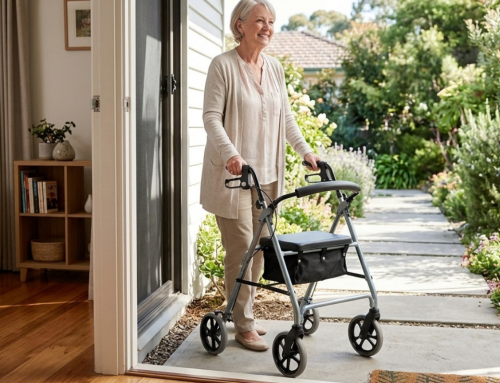




The summer holidays are a time for family, beaches, road trips and long-awaited catch-ups. If you use a rollator walker, a little planning can make the difference between a stressful trip and a relaxed one.
Whether you’re flying interstate for Christmas, driving to the coast, boarding a cruise or simply heading to a busy shopping centre for last-minute gifts, travelling with a rollator walker is very achievable. You just need the right walker, the right preparation and a few practical tricks.
This guide covers everything you need to know about travelling with a rollator walker in Australia, from pre-trip checks and airport tips to managing sand, heat and holiday crowds.
Is Your Current Rollator Walker Holiday-Ready? A Quick Pre-Trip Check
Before you pack, give your rollator a quick once-over at least two weeks before you leave. That gives you time to fix problems or replace parts before the holiday rush.
Your pre-trip checklist:
- Brakes. Squeeze and lock them. They should hold the rollator firmly in place and release smoothly.
- Wheels. Look for wear, cracks or flat spots, and check they spin freely without wobbling.
- Folding mechanism. Fold and unfold it a few times. It should click securely into place both ways.
- Handles and grips. Check the height locks are tight and the grips aren't loose or split.
- Seat and backrest. Make sure the seat is secure and the backrest isn't torn or loose.
- Bag or basket. Check zips, straps and attachments.
- Weight and size. Can you, or your travel companion, lift it into the car boot or onto a train comfortably?
Ask yourself: Has my walker felt heavy, awkward or bulky on recent outings? If so, a dedicated travel rollator might make your holiday far easier.
What Makes a Good Travel Rollator: Weight, Fold Size and Wheel Choice
A travel rollator is designed to move with you, not slow you down. If you plan to fly, drive long distances or explore new places, these are the features that matter most.
Weight
- Lighter rollators are easier to lift into car boots, overhead areas and onto public transport.
- Carbon fibre and ultra-light aluminium frames are popular for travel because they cut weight without sacrificing strength.
Fold size
- Look for a compact or double-fold design that folds small enough for a car boot, cruise cabin or hotel room corner.
- A rollator that stands upright when folded is handy in queues and small spaces.
Wheel choice
- Medium to large wheels (around 8") handle footpaths, cobblestones, boardwalks and car parks better than small indoor wheels.
- Very large all-terrain wheels are great outdoors but may add weight and bulk.
Other travel-friendly features
- A comfortable seat for queues and rest stops
- A secure bag for travel documents, water and medication
- Easy one-handed folding
- A carry handle or strap for lifting
Examples of travel-friendly styles include lightweight carbon fibre walkers such as the Aspire Vogue Carbon Fibre range, double-fold designs like the Uplivin Trive Double Fold Walker, compact folding models like the EZ Fold N Go, and 2-in-1 transit rollators like the DAYS 2 in 1 Transit Rollator, which convert into a chair when you're too tired to walk.
Flying With a Rollator Walker in Australia: What to Expect at the Airport
Flying with a rollator walker in Australia is generally straightforward, and most airlines treat walking aids as essential mobility equipment. Policies differ between airlines, so always check the details with your airline before you fly.
Before you fly:
- Tell the airline when you book. Let them know you travel with a rollator and whether you need assistance, such as a wheelchair between check-in and the gate.
- Check your airline's mobility aid policy. Many airlines carry mobility aids at no extra charge, separate from your standard baggage allowance, but confirm this for your specific fare and route.
- Measure and weigh your rollator. Some airlines ask for dimensions and weight in advance.
- Label it. Attach a luggage tag with your name, phone number and destination.
At the airport:
- Arrive early. Holiday airports are busy, and security checks for mobility aids can take a little longer.
- Ask about using it to the gate. In many cases, you can keep your rollator until you board, then hand it over at the aircraft door to be stowed in the hold.
- Expect a security check. Your rollator may be inspected or swabbed. Staff can usually provide a seat while this happens.
- Ask for it at the aircraft door on arrival. Request that your rollator be returned to you as you leave the plane rather than at the baggage carousel, where possible.
Protect your rollator:
- Remove loose items like trays, cup holders and bags and carry them with you.
- Fold it securely and consider a protective travel cover.
- Take a quick photo before handing it over, in case of damage.
Road Trips: Folding, Lifting and Packing Your Rollator in the Car
Long drives are a classic part of the Australian summer holiday. A little preparation can make loading and unloading your rollator much easier.
Folding and lifting tips:
- Practise folding at home before you leave, so it becomes second nature.
- Lock the brakes before folding so the rollator doesn't roll away.
- Lift with your legs, not your back. Bend your knees, keep the rollator close to your body and avoid twisting.
- Share the load. Ask a travel companion to lift it if it's heavy or awkward.
Packing tips:
- Pack the rollator last so it's the first thing out when you arrive.
- Keep it accessible if you plan to stop at rest areas, service stations or lookouts.
- Secure it so it doesn't slide around and get damaged on long drives.
- Consider the back seat if the boot is full of luggage and presents.
Plan your stops. On long drives, stop every couple of hours to stretch your legs. Using your rollator at rest stops helps reduce stiffness and keeps you moving comfortably.
Trains, Buses and Cruises: Using a Rollator on Public and Holiday Transport
Rollators are generally welcome on public transport and holiday transport across Australia, but rules and facilities vary between states, operators and cruise lines.
Trains and buses:
- Check accessibility information on your transport operator's website before travelling.
- Use accessible boarding points, such as designated carriages, ramps or low-floor buses.
- Fold your rollator if required and keep it out of aisles and doorways.
- Apply the brakes whenever the vehicle is moving if you keep it unfolded beside you.
- Avoid peak times where possible. Holiday crowds can make boarding stressful.
- Ask staff for help. Drivers and station staff can often assist with ramps or boarding.
Cruises:
- Let the cruise line know you travel with a rollator when booking, and ask about accessible cabins.
- Check cabin door widths and bathroom access if you're booking a standard cabin.
- Ask about shore excursions. Some ports use smaller tender boats to reach shore, which may be harder to access with a mobility aid.
- Plan for long distances on board. Cruise ships are large, so a rollator with a seat is a big help.
Getting Around Unfamiliar Places: Accommodation, Shopping Centres and Holiday Crowds
New places come with unknowns: steps, narrow doorways, steep driveways and crowded walkways. A bit of research before you go helps you avoid surprises.
Accommodation:
- Ask specific questions when booking. How many steps are there? Is there a lift? How wide are the doorways? Is the bathroom step-free?
- Request a ground-floor room or a room close to the lift.
- Look for accessible rooms with walk-in showers and grab rails if you need them.
- Staying with family? Ask them to clear walkways, move rugs and make space beside your bed for your rollator.
Shopping centres and holiday crowds:
- Go early or late to avoid the busiest periods in the lead-up to Christmas.
- Use lifts rather than escalators. Escalators are not safe with a rollator.
- Look for accessible parking close to entrances if you hold a disability parking permit.
- Take rest breaks. Your rollator seat is ideal for a quick sit-down while others browse.
- Keep valuables secure in a zipped bag on the front of your rollator.
Summer Conditions: Using a Rollator in the Heat, on Sand and on Uneven Paths
Australian summers bring unique challenges for rollator users. Heat, sand and uneven paths all need a little extra care.
Heat:
- Metal frames heat up quickly in direct sun. Park your rollator in the shade and check handles and seats before touching or sitting.
- Don't leave it in a hot car for long periods. Extreme heat can affect plastic and rubber parts over time.
- Stay hydrated. Carry a water bottle in your rollator bag or a cup holder.
- Walk in the cooler parts of the day, such as early morning or late afternoon.
- Wear a hat and sunscreen, and consider breathable gloves if handles get warm.
Sand:
- Standard rollator wheels don't work well on soft sand. They sink and become difficult to push.
- Look for beach access matting or accessible boardwalks, which many popular beaches provide.
- Ask about beach wheelchairs. Some councils and surf clubs offer beach wheelchairs for loan or hire.
- Rinse sand off wheels and brakes afterwards to keep them working smoothly.
Uneven paths:
- Larger wheels handle gravel, grass and boardwalks more easily.
- Approach kerbs and bumps straight on rather than at an angle.
- Slow down on slopes and use your brakes to control your speed.
- Check paths ahead using maps or by calling attractions to ask about accessibility.
Holiday Travel Mistakes Rollator Users Should Avoid
- Even experienced rollator users can be caught out when travelling. Avoid these common mistakes.
- Leaving maintenance to the last minute. Check brakes, wheels and folding mechanisms well before you go.
- Travelling with a rollator that's too heavy. If lifting it is a struggle at home, it will be harder on holiday.
- Not telling the airline or cruise line. Advance notice makes assistance and handling much smoother.
- Checking it in with general luggage. Where possible, keep your rollator until the gate and ask for it back at the aircraft door.
- Forgetting the seat isn't a wheelchair. Never let someone push you while sitting on a standard rollator seat. Use a 2-in-1 transit model if you need this option.
- Leaving accessories attached in transit. Trays, bags and cup holders can be lost or damaged.
- Overpacking your rollator bag. Too much weight can make the rollator unstable or tip forward.
- Not planning for heat and sand. Hot frames and soft sand can quickly spoil a beach day.
- Using escalators. Always use lifts or ramps instead.
Accessories That Make Holiday Travel Easier
The right accessories can turn a good rollator into a great travel companion.
- Rollator bag or travel bag. Keeps travel documents, medication, water and snacks within reach.
- Cup or bottle holder. Essential for staying hydrated in the summer heat.
- Cane or crutch holder. Handy if you use another walking aid alongside your rollator.
- Backrest. Adds comfort when you sit in queues, at bus stops or during long outings.
- Tray. Useful at your accommodation for carrying meals and drinks safely.
- Protective travel cover. Helps protect your rollator in transit, especially on flights.
- Reflective strips or lights. Improve visibility during evening walks.
- Luggage tag. Makes your rollator easy to identify and return if it goes astray.
Tip: Only take the accessories you'll actually use. Extra attachments add weight and can be easy to lose while travelling.
Need a Travel Rollator Before December? Ordering and Fitting in Time
If your current rollator isn't up to the trip, now is the time to act. The weeks before Christmas are busy for deliveries, so leaving it to the last minute can be risky.
How to get organised in time:
- Decide what you need. Think about how you'll travel, how far you'll walk and who will lift the rollator.
- Compare lightweight and folding models. Focus on weight, fold size, wheel size and seat comfort.
- Check your measurements. Measure from the floor to your wrist crease to find the right handle height.
- Ask about funding. If you're eligible for NDIS, My Aged Care or DVA support, allow extra time for quotes and approvals. You can request a quote using the Add to quote option on product pages.
- Order early. Allow time for delivery, adjustments and a few practice outings before you travel.
- Practise before you go. Fold, lift and walk with your new rollator at home and around your neighbourhood so it feels familiar.
At Able Medilink, our team can help you compare travel-friendly rollators, check the fit and choose accessories that suit your holiday plans.
Final Thoughts
Travelling with a rollator walker over the holidays is all about preparation.
- Check your rollator at least two weeks before you leave.
- Choose a travel-friendly model that's light, folds compactly and has wheels suited to where you're going.
- Contact airlines and cruise lines early and ask about mobility aid policies and assistance.
- Plan for car travel, public transport and unfamiliar places.
- Prepare for summer conditions like heat, sand and uneven paths.
- Pack useful accessories without overloading your rollator.
- Order a new travel rollator early if you need one before December.
Getting ready for a holiday trip? Browse the Able Medilink range of lightweight and folding rollators and travel accessories, or use Add to quote to request pricing for your funding provider. Our friendly team is happy to help you find a rollator walker that makes your summer holidays easier and more enjoyable.