



The holiday season is full of outings. There’s Christmas shopping, family lunches, local markets, carols by candlelight, beach walks and day trips with the grandkids. Each one asks something a little different of your body and your mobility aid.
If you’re deciding between a rollator and a walker, or wondering whether the one you already have is right for the weeks ahead, this guide looks at the question through real holiday scenarios. Instead of comparing specifications, it looks at where you’re going and what you’ll be doing when you get there.
New to the difference between the two? Our guide, Rollator vs Walker: Which Is Right for You? An Australian Guide, explains how each one works. This article focuses on how they perform on holiday outings.

Rollator or Walker for Outings: The Quick Answer
For most holiday outings, a rollator is the better choice because it rolls easily over longer distances, carries shopping and has a built-in seat for rest breaks. A walker suits short, stability-first trips, such as visiting a relative’s home, where you need maximum support.
The right answer for you depends on your balance, your stamina and the kind of outing you have planned. Your physio or occupational therapist (OT) can confirm which is safest for you.
Holiday Outings Put Different Demands on Your Mobility Aid
At home, you know every doorway, step and rug. Your walking distances are short and you can sit down whenever you like. Holiday outings are different.
Here’s what changes when you head out:
- Distance. A shopping centre, market or sightseeing spot can mean hundreds of metres or even kilometres of walking.
- Crowds. December brings busy car parks, packed walkways and queues at every turn.
- Standing time. Waiting in queues, chatting at gatherings and watching carols events can mean long periods on your feet.
- Terrain. Grass, gravel, boardwalks, sand and uneven footpaths replace the smooth floors you’re used to.
- Transport. Your aid needs to fold, lift into the car and come back out again, sometimes several times in one day.
- Heat. Australian summer conditions add fatigue and make rest breaks more important.
An aid that works perfectly at home may feel quite different on a busy Saturday at the shops. With those demands in mind, let’s look at how rollators and walkers handle each type of outing.
Christmas Shopping and Busy Shopping Centres: Rollator or Walker?
Usually the winner: a rollator, especially a shopper rollator.
Shopping centres are long, flat and busy, which plays to a rollator’s strengths.
Why a rollator works well for shopping:
- It rolls smoothly across shopping centre floors, so you can cover more ground with less effort.
- The seat is a lifesaver in queues. Lock the brakes and sit while you wait at the checkout or for a family member.
- It carries your purchases. A bag or basket means you don’t have to juggle shopping bags while holding onto a frame.
- Shopper rollators go further. Models with a large, built-in shopping bag, such as the Comfort Move Carlett or the Trust Care Let’s Shop, double as a shopping trolley.
When a walker might still suit:
- You only need to pop into one or two nearby shops.
- You rely on heavy support through your arms and your physio has advised a walker.
- Someone else is carrying the shopping and you can use centre seating for rests.
Shopping centre tips:
- Go early on weekdays to avoid the biggest crowds.
- Park close to an entrance with lifts, and avoid escalators.
- Don’t overload your rollator bag. Too much weight can make it unstable.
Family Gatherings, Lunches and Visiting Relatives’ Homes
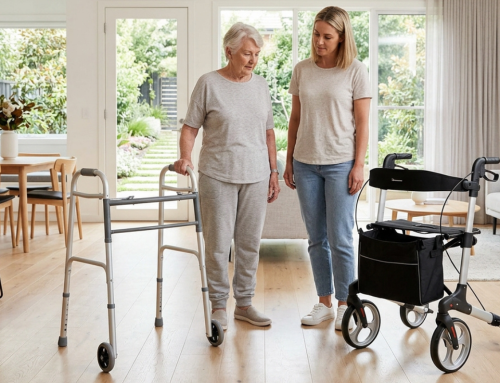
Often the winner: a walker or compact indoor rollator.
Family gatherings usually involve less walking and more navigating. Other people’s homes can be tricky, with steps at the front door, narrow hallways, rugs, furniture and crowded dining areas.
Why a walker or compact model can work better here:
- Better in tight spaces. A narrow walker or compact indoor rollator moves more easily between furniture and through doorways.
- Extra stability when moving from table to couch or getting up after a long lunch.
- Short distances. You may only walk between the car, the lounge, the table and the bathroom.
When a rollator still makes sense:
- The home is spacious and mostly step-free.
- You’ll be walking to a park or local cafe as part of the day.
- You want a seat to rest on during a long afternoon.
Tips for visiting relatives:
- Call ahead. Ask about steps, lifts, bathroom access and where you’ll be seated.
- Ask hosts to clear walkways and move loose rugs or cables.
- Sit in a firm chair with armrests so it’s easier to stand up after a meal.
- Park your aid within reach so you’re not tempted to walk without it.
- Consider a tray. An indoor walker with a meal tray helps you carry a plate or drink safely.
Markets, Carols Events, Parks and Beach Walks
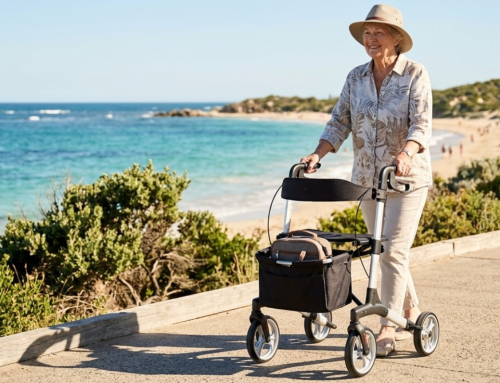
Usually the winner: an outdoor rollator with larger wheels.
Outdoor holiday events are often on grass, gravel, bark, boardwalks or uneven paths, and they usually involve plenty of standing around.
Why an outdoor rollator works well:
- Larger wheels (around 8″ or more) handle grass, gravel and uneven ground far better than small wheels or walker glides.
- A built-in seat gives you somewhere to sit while you watch carols or wait for the fireworks, even when seating is limited.
- A storage bag carries water, sunscreen, a hat and a light jumper for the evening.
- Good brakes keep you steady on slopes and when you stop to browse market stalls.
Where both aids struggle:
- Soft sand. Neither rollators nor walkers handle soft sand well. Look for beach access matting, boardwalks or firm sand near the water, and ask local councils or surf clubs about beach wheelchairs.
- Steep or rough bush tracks. Check accessibility information before you go.
Tips for outdoor events:
- Arrive early to find a flat spot close to paths and facilities.
- Bring a backrest attachment for more comfort during long events.
- Park your rollator in the shade, as metal frames heat up quickly in the sun.
- Carry a small torch or attach reflective strips for evening events.
Day Trips and Sightseeing: Distance, Rest Breaks and Car Transfers
Usually the winner: a lightweight folding rollator.
Day trips combine long drives, several stops and a lot of walking. That means your mobility aid gets folded, lifted and unfolded many times in one day.
What matters most on day trips:
- Lift weight. If you or your companion will lift the aid in and out of the car several times, a lightweight frame makes a big difference.
- Fold size. A compact fold leaves more room in the boot for luggage, picnic gear and presents.
- Walking distance. Sightseeing, wineries, lookouts and towns can involve far more walking than you expect.
- Rest breaks. A seat lets you stop and enjoy the view whenever you need to.
Why a walker is usually less suited:
A walker is light and folds flat, which is helpful in the car. However, it’s slower over longer distances, offers no seat and can be tiring to use on a full day out.
Tips for day trips:
- Plan routes with accessible parking, toilets and rest stops.
- Practise folding and lifting before you leave.
- Keep your aid near the top of the boot for quick access.
- Pace yourself and take breaks before you feel exhausted.
Planning to fly, cruise or travel further afield? Our guide, Travelling Over the Holidays With a Rollator Walker: Australian Tips, covers airports, cruises and long road trips in more detail.
Side-by-Side: How Rollators and Walkers Compare on Common Holiday Outings
This table compares how each aid generally performs in typical holiday scenarios. Your own needs, balance and health advice should always guide your final choice.
| Holiday outing | Rollator | Walker | Usually suits best |
|---|---|---|---|
| Christmas shopping at a large centre | Rolls easily, seat for queues, carries purchases | Slower over distance, no seat, hard to carry bags | Rollator (or shopper rollator) |
| Quick trip to a local shop | Convenient, carries items | Fine for short distances | Either |
| Lunch at a relative's home | Can feel bulky in tight spaces | Stable and easy to manoeuvre indoors | Walker or compact rollator |
| Restaurant or cafe meal | Seat useful while waiting, may need to be parked | Compact and easy to tuck away | Either |
| Local markets on grass or gravel | Larger wheels handle terrain, bag for purchases | Glides can catch on uneven ground | Outdoor rollator |
| Carols by candlelight or outdoor events | Seat for long periods, carries supplies | No seat, tiring when standing | Outdoor rollator |
| Beach walks | Struggles on soft sand, good on boardwalks | Struggles on soft sand | Use matting or boardwalks |
| Day trips and sightseeing | Rest breaks, covers distance | Light, but slower and tiring over distance | Lightweight folding rollator |
| Short outings after surgery | Only if cleared by your health professional | Maximum stability | Walker |
When It Makes Sense to Own Both (or Choose a 2-in-1)
Many people find one mobility aid doesn’t cover every holiday situation. If your days range from quiet family lunches to big shopping trips, it may be worth considering more than one option.
An indoor and outdoor pair
- A compact walker or indoor rollator for home and visiting family
- An outdoor rollator with larger wheels for shopping, markets and events
- This approach gives you the right tool for each setting without compromise.
A 2-in-1 rollator and transit chair
- Works as a rollator when you’re walking
- Converts into a transit chair so a carer can push you when you’re tired
- Ideal for long days out, big shopping centres and events where stamina may run low
- Examples include the DAYS 2 in 1 Transit Rollator and the REDGUM CrossOver 2-in-1 Rollator
An adjustable seat walker
- Offers a seat for rest breaks in a simpler, often more affordable frame
- Models like the Aspire Flex Adjustable Seat Walker let you adjust the seat height for safer sitting and standing
Important safety reminder: Never let someone push you while you’re sitting on a standard rollator seat. Only 2-in-1 models designed as transit chairs should be used this way.
Getting the Right Fit Before the Holiday Rush
Whichever aid you choose, the right fit and a bit of practice will make your holiday outings safer and more enjoyable. The weeks before Christmas get busy, so it pays to act early.
Before the holidays:
- Talk to your physio or OT. Ask whether a rollator, walker or both suits your balance and the outings you have planned.
- Check the handle height. Stand straight in your usual shoes with arms relaxed and measure from the floor to your wrist crease.
- Check your current aid. Test brakes, wheels, folding and grips, and replace worn parts.
- Order early. Allow time for delivery, adjustments and any funding approvals. You can request pricing using the Add to quote option on product pages.
- Practise before big outings. Take your aid to a local shop or park so it feels familiar before the busy days arrive.
- Add useful accessories. Bags, cup holders, backrests and trays can make holiday outings easier.
At Able Medilink, our team can help you compare rollators and walkers, check the fit and choose accessories that suit the outings you have planned this holiday season.
Final Thoughts
The rollator vs walker decision for holiday outings comes down to where you’re going and how long you’ll be out.
- Shopping centres: A rollator or shopper rollator usually wins for distance, rest breaks and carrying purchases.
- Family gatherings: A walker or compact indoor model is often better for tight spaces and stability.
- Markets, carols and parks: An outdoor rollator with larger wheels handles terrain and gives you a seat.
- Day trips: A lightweight folding rollator balances easy lifting with walking distance and rest breaks.
- Mixed plans: An indoor and outdoor pair, or a 2-in-1 rollator transit chair, covers more situations.
Ready for the holiday season? Browse the Able Medilink range of rollators, walkers and accessories, or use Add to quote to request pricing for your funding provider. Our friendly team is happy to help you find the right mobility aid for every outing this summer.