




Your GP, physio or occupational therapist (OT) has suggested a walking aid, or perhaps you’re helping a parent who has started to feel unsteady on their feet. Now you’re facing a common question: should you choose a rollator or a walker?
The two terms are often used interchangeably in Australia, but they are quite different devices. Choosing the right one affects your safety, your confidence and how far you can comfortably go each day.
This guide explains the difference between a rollator and a walker, compares them side by side, and helps you work out which one suits your needs, your home and your lifestyle.
Rollator vs Walker: The Key Difference in One Sentence
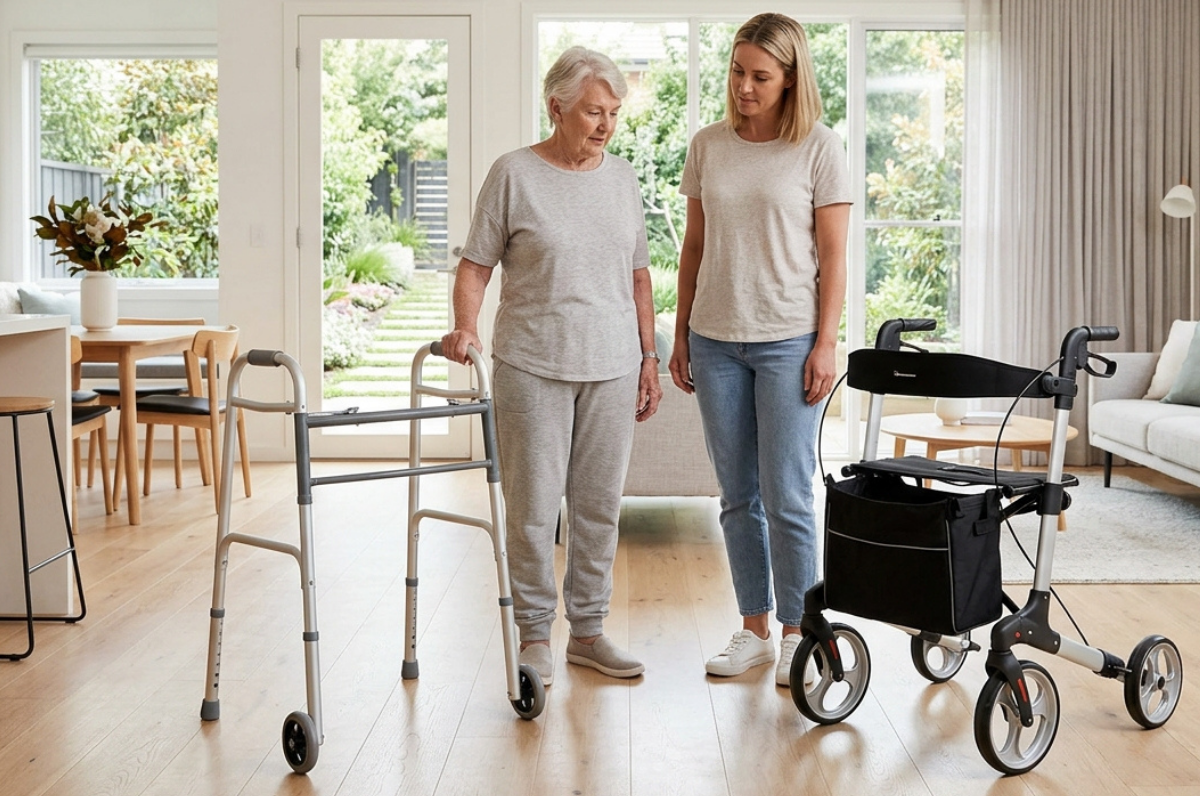
A walker is a lightweight frame with no wheels or two front wheels that you lift or slide with each step, offering maximum stability, while a rollator has three or four wheels, hand brakes and usually a seat, letting you walk further and faster with less effort.
In short: a walker prioritises stability, and a rollator prioritises mobility and endurance.
What Is a Walker? Frame Types and Who They Suit
A walker, often called a walking frame in Australia, is a lightweight metal frame with four legs that you hold onto for support as you walk. You stand inside the frame, move it forward, then step into it.
Walkers are designed to take a significant amount of your body weight through your arms, which makes them very stable.
Common types of walkers:
- Standard (pick-up) walking frame. Four legs with rubber feet and no wheels. You lift the frame, place it ahead of you, then step forward. This offers the most stability but is the slowest to use.
- Front-wheeled walker. Two wheels at the front and glides or rubber feet at the back. You push it forward rather than lifting it, which suits people who find lifting a frame tiring or difficult.
- Reciprocal walker. A hinged frame that lets you move one side forward at a time, sometimes used in rehabilitation.
A note on “seat walkers”: In Australia, the term “seat walker” is commonly used for a wheeled frame with a seat. Technically, most of these are rollators, which we explain next.
Walkers generally suit people who:
- Need to lean heavily on a frame for support
- Have significant balance concerns
- Are recovering from surgery, such as a hip or knee replacement
- Walk mostly short distances indoors
What Is a Rollator? Wheels, Brakes and a Built-In Seat
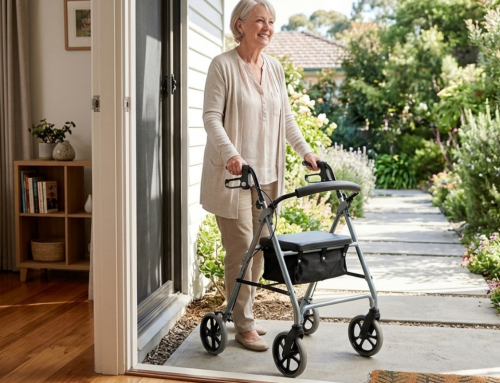
A rollator is a wheeled walking aid that rolls along the ground as you walk. Instead of lifting or sliding a frame, you push the rollator ahead of you in a smooth, continuous motion.
Key features of a rollator:
- Wheels on every leg. Most rollators have four wheels, while three-wheel rollators have a single front wheel for tighter turning.
- Hand brakes. Similar to bicycle brakes, these let you slow down and lock the rollator in place when you stop or sit.
- A built-in seat. Most four-wheel rollators have a seat so you can rest whenever you need to.
- Storage. Many include a bag, basket or tray for shopping and personal items.
- Folding frames. Most fold for storage and transport in the car.
Rollators come in a wide range of styles, from compact indoor models with small wheels to outdoor rollators with large wheels for footpaths and grass, plus lightweight carbon fibre and 2-in-1 transit models.
Rollators generally suit people who:
- Have reasonable balance and only need light support
- Want to walk longer distances
- Get out and about regularly, such as shopping or visiting friends
- Need regular rest breaks
Rollator vs Walker Comparison: Stability, Speed, Weight and Portability
Here’s how the two compare across the factors that matter most.
| Factor | Walker (walking frame) | Rollator |
|---|---|---|
| Stability | Very high. Takes heavy weight through the arms. | Moderate. Best for people with reasonable balance. |
| Walking speed | Slower, step by step | Faster, smooth continuous walking |
| Effort to use | Higher for pick-up frames | Lower. It rolls with you. |
| Distance | Short distances | Short to long distances |
| Seat for resting | No | Yes, on most models |
| Brakes | Not needed | Hand brakes required |
| Frame weight | Very light | Light to moderate |
| Indoor use | Excellent | Good, depending on size |
| Outdoor use | Limited | Good to excellent, depending on wheels |
| Portability | Folds flat, easy to lift | Folds, some models compact |
| Storage | Optional add-on bags or trays | Bag, basket or tray often included |
| Typical price | Generally lower | Generally higher |
The bottom line: If stability is your top priority, a walker is usually the safer choice. If you want independence over longer distances and the option to rest, a rollator is usually the better fit.
Who Should Choose a Walker
A walker is often the right choice if safety and support are the main concerns.
Consider a walker if you:
- Have significant balance problems or a history of falls
- Need to put a lot of weight through your arms when walking
- Are recovering from surgery or injury, such as a joint replacement, where your health professional has advised limited weight-bearing
- Mainly walk indoors over short distances, such as between the bedroom, bathroom and kitchen
- Have reduced hand strength or coordination that makes squeezing brakes difficult
- Find a rolling frame moves too quickly and feels hard to control
Example: After a hip replacement, a physio may recommend a front-wheeled walker for the first weeks of recovery. As strength and balance improve, many people move on to a rollator.
Who Should Choose a Rollator
A rollator is often the better choice for people who are reasonably steady on their feet but want support, confidence and endurance.
Consider a rollator if you:
- Have reasonable balance and need light support rather than heavy weight-bearing
- Want to walk longer distances, such as around the shops, the park or your neighbourhood
- Tire easily and need a seat for regular rest breaks
- Want to carry things like shopping, a handbag or a water bottle
- Have a busy lifestyle with outings, appointments and social activities
- Can comfortably squeeze and lock hand brakes
Example: An older adult who walks to the local cafe each morning but needs to stop and rest halfway would likely benefit from a four-wheel outdoor rollator with a comfortable seat and storage bag.
Other Options Worth Knowing: Three-Wheel, Forearm, Knee and Shopper Rollators
Beyond standard walkers and four-wheel rollators, there are specialised options that may suit particular needs.
Three-wheel walkers
- A single front wheel and two rear wheels
- Lighter and more manoeuvrable in tight spaces
- Usually no seat, and less stable than a four-wheel rollator
- Suit active users who want a nimble walker for indoor and light outdoor use
Forearm walkers
- Padded forearm supports let you lean on your forearms instead of your hands and wrists
- Help people with arthritis, wrist pain or weak grip
- Encourage a more upright posture for some users
Knee walkers (knee scooters)
- You rest the injured leg’s knee on a padded platform and push with the other foot
- Often used as a short-term alternative to crutches after foot or ankle injury or surgery
Shopper rollators
- Rollators with a large, built-in shopping bag or basket
- Designed for regular trips to the shops and markets
- Combine walking support with the convenience of a shopping trolley
2-in-1 rollator transit chairs
- Work as a rollator for walking and convert to a transit chair so a carer can push you
- Useful for longer outings when stamina varies
Meal tray walkers
- Indoor walkers with a built-in tray for carrying meals and drinks safely around the home
Questions to Ask Your Physio or OT Before Deciding
A rollator or walker is a health and safety decision, not just a purchase. Your physiotherapist or occupational therapist can assess your balance, strength and home environment and recommend what’s safest for you.
Useful questions to ask:
- How much weight should I put through my arms when walking?
- Is my balance steady enough to use a wheeled walker safely?
- Can I manage hand brakes with my current grip strength?
- Should I use a different aid indoors and outdoors?
- What handle height and frame size suit me?
- Will my needs change as I recover or as my condition progresses?
- Do I need a seat, and is it safe for me to sit and stand from it?
- Will my walking aid fit through my doorways and around my home?
- Can you provide a written recommendation for funding purposes?
Tip: Take notes or bring a family member along. If you’re buying for a parent, ask whether you can attend the assessment so you understand the recommendations too.
Rollator and Walker Prices and Funding in Australia
Typical price ranges in Australia:
| Type | Typical price range | Notes |
|---|---|---|
| Standard or front-wheeled walking frame | Generally the most affordable option | Simple frames with few moving parts |
| Economy rollator | Around $210 to $300 | Basic frame, small or medium wheels, seat and brakes |
| Mid-range rollator | Around $300 to $650 | Lighter frames, better folding, bags and trays |
| Premium rollator | Around $650 to $910+ | Carbon fibre, large outdoor wheels, shopper and 2-in-1 designs |
| Specialty walkers | Around $400 to $700 | Knee walkers and forearm walkers |
Prices vary by brand, materials and features, so compare a few models before deciding.
Funding pathways to explore:
- NDIS. Participants may be able to use assistive technology funding in their plan to buy a walking aid. A recommendation from an OT or physio helps support the purchase.
- My Aged Care. Older Australians receiving government-funded aged care at home may be able to access assistive technology support. Contact My Aged Care or your care provider to find out what’s available.
- DVA. Eligible veterans may access mobility aids through the Department of Veterans’ Affairs, usually following a clinical assessment.
- Private health insurance. Some extras policies include rebates for mobility aids. Check with your insurer.
Funding rules and eligibility change over time, so always confirm the current requirements with your funding body, plan manager or care provider before you buy. A written quote from your supplier is usually needed, and you can request one easily using the Add to quote option on product pages.
Still Unsure? How to Test Both Before You Commit
The best way to decide between a rollator and a walker is to try them. How a frame feels in your hands, how the brakes respond and how easily it moves around corners tell you far more than any product description.
When testing a walking aid:
- Check the height. Your wrists should line up with the handles when your arms hang by your sides.
- Walk a few laps. Include turns, a doorway and, if possible, a change in floor surface.
- Test the brakes. Make sure you can squeeze and lock them comfortably.
- Sit on the seat. Check you can sit and stand up safely with the brakes locked.
- Fold and lift it. Practise folding it and lifting it as if loading it into a car.
- Ask about accessories. Bags, trays, cup holders and backrests can make daily use easier.
Speaking with a mobility specialist can help you compare options, confirm the right fit and prepare quotes for funding. At Able Medilink, our team can talk you through the differences between rollators and walkers and help you find a walking aid that matches your needs and lifestyle.
Final Thoughts
The rollator vs walker decision comes down to how much support you need and how you want to move through your day.
- Choose a walker if you need maximum stability, heavy weight-bearing support or mostly short indoor walking.
- Choose a rollator if you have reasonable balance and want to walk further, carry things and rest when needed.
- Consider specialty options like forearm, knee, three-wheel, shopper or 2-in-1 models for specific needs.
- Ask your physio or OT for an assessment and written recommendation.
- Explore funding through the NDIS, My Aged Care, DVA or private health insurance.
Ready to explore your options? Browse the Able Medilink range of rollators and walkers to compare models, or use Add to quote to request pricing for your funding provider. If you have questions about which walking aid is right for you, our friendly team is here to help.